
A true plumbing emergency rarely waits for business hours, and in Brisbane it can turn from a small leak into major damage fast. Knowing when to call a 24/7 plumber Brisbane residents trust, and what to do in the first few minutes, can protect property, reduce repair time, and keep people safe. This guide explains what counts as urgent, what to do before help arrives, and how to avoid the after-hours mistakes that inflate bills.
Key Takeaways
- Call a 24hr plumber Brisbane immediately for burst pipes, uncontrolled leaks, sewage overflows, water near electrics, or any suspected gas leak where waiting will worsen damage or risk safety.
- In the first 5–10 minutes, shut off the nearest isolation valve (or the main water/gas at the meter), ventilate if gas is suspected, and keep ignition sources and electrical switching to a minimum.
- Limit damage fast by moving valuables, containing water with towels and buckets, improving safe airflow for drying, and treating Brisbane humidity as a mould risk that starts quickly.
- Speed up after-hours dispatch by sharing your exact address and access details, what happened and when, what you’ve isolated, and photos/videos of the leak or overflow.
- Choose a reliable 24/7 plumber Brisbane professionals recommend by confirming Queensland licensing (and gas authorisation), insurance, clear call-out/hourly/parts pricing, and a ‘make safe now, repair later’ approach when appropriate.
- Reduce the final bill by isolating early, clearing access for the technician, sharing repeat-problem history (often solved faster with CCTV drain inspection), and keeping photos and notes for landlords or insurers.
What Counts As A Plumbing Emergency After Hours
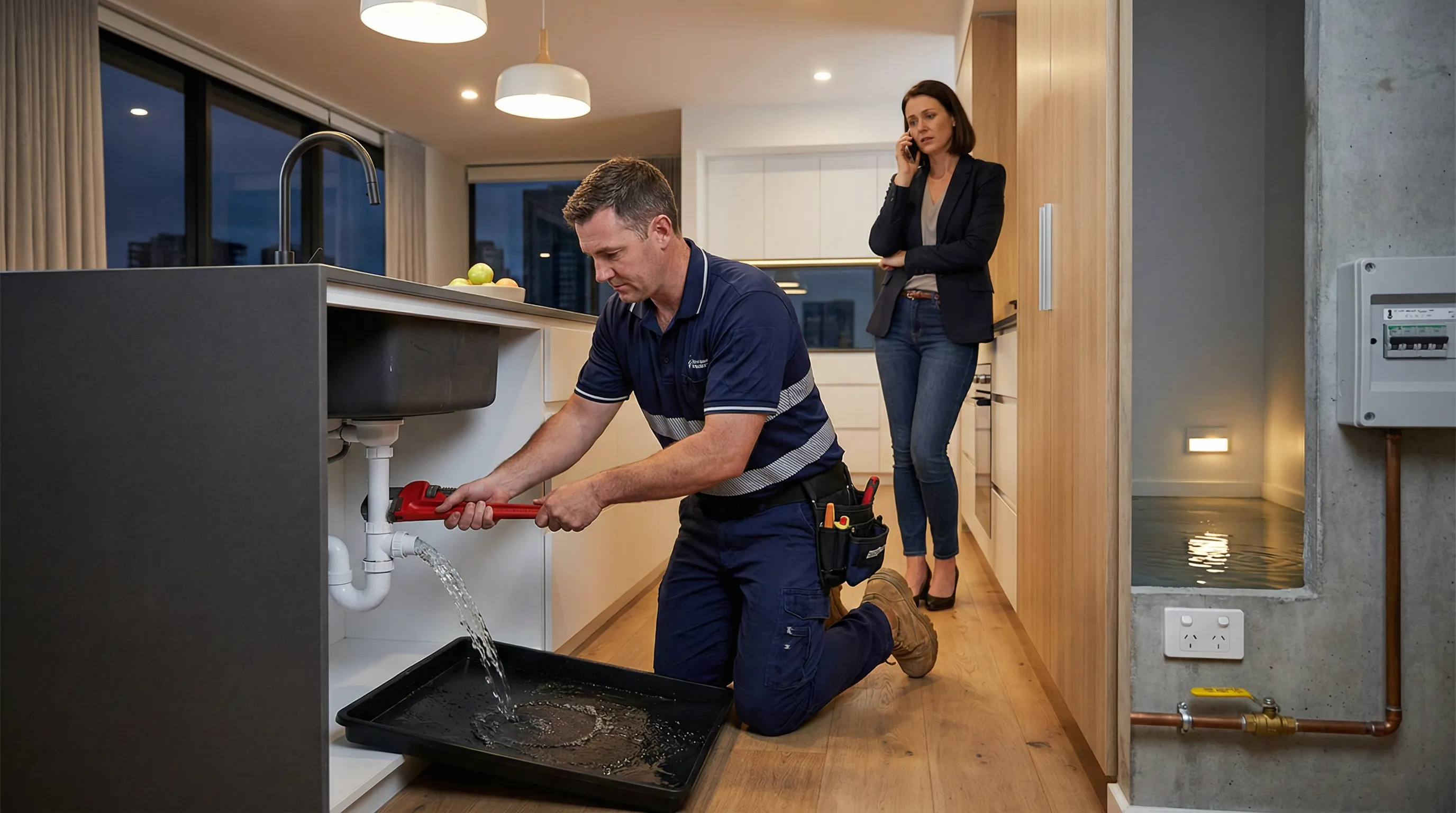
Not every plumbing issue needs an immediate after-hours call-out, but some problems can cause rapid damage or create real safety risks. In Brisbane homes and businesses, the most urgent scenarios usually involve uncontrolled water flow, sewage overflow, or anything related to gas.
Signs You Need A 24hr Plumber Immediately
A job is typically “emergency” when waiting until morning is likely to:
- Flood a property or damage structure: burst pipe, failed flexible hose, water pouring through ceilings, or a hot water tank leaking heavily.
- Create electrical danger: water near switchboards, power points, downlights, or appliances.
- Cause sewage exposure: a blocked toilet service situation that can’t be stopped, sewage backing up into showers/floor wastes, or a blocked stormwater drains problem causing indoor overflow after heavy rain.
- Suggest a gas leak: gas smell, hissing near a gas line, dizziness/headaches in enclosed spaces, or pilot lights repeatedly going out.
- Stop essential services in a critical setting: no water in a childcare centre, restaurant kitchen plumbing failure, or a major leak in a multi-unit building.
In these cases, an after-hours response is usually justified because the situation can worsen quickly, and the cost of damage often outstrips the call-out fee.
For Brisbane residents who need fast support, The Brisbane Plumbers provide 24/7 emergency plumbing for burst pipes, gas leaks, and water leaks across Brisbane, QLD 4034. Their contact details are 1300 576 388 and [email protected].
Issues That Can Usually Wait Until Morning
Some problems are frustrating but stable enough to schedule during standard hours:
- Slow-draining sinks/showers (no overflow risk yet)
- Minor drips from taps (manageable with a bucket and isolation valve if present)
- A single toilet that runs but still flushes and doesn’t overflow — though persistent toilet leaking Brisbane situations should be booked promptly to avoid water waste and hidden damage
- Low water pressure affecting one fixture only (often a clogged aerator or local issue)
- Hot water is warm, not hot (often a tempering valve or thermostat issue that can be booked)
A simple rule: if the issue can be isolated (water or gas shut off) and there is no active damage or safety risk, it can often wait. If isolation is not possible, or the situation is escalating, it’s time to call a 24hr plumber in Brisbane.
First Steps To Take Before The Plumber Arrives
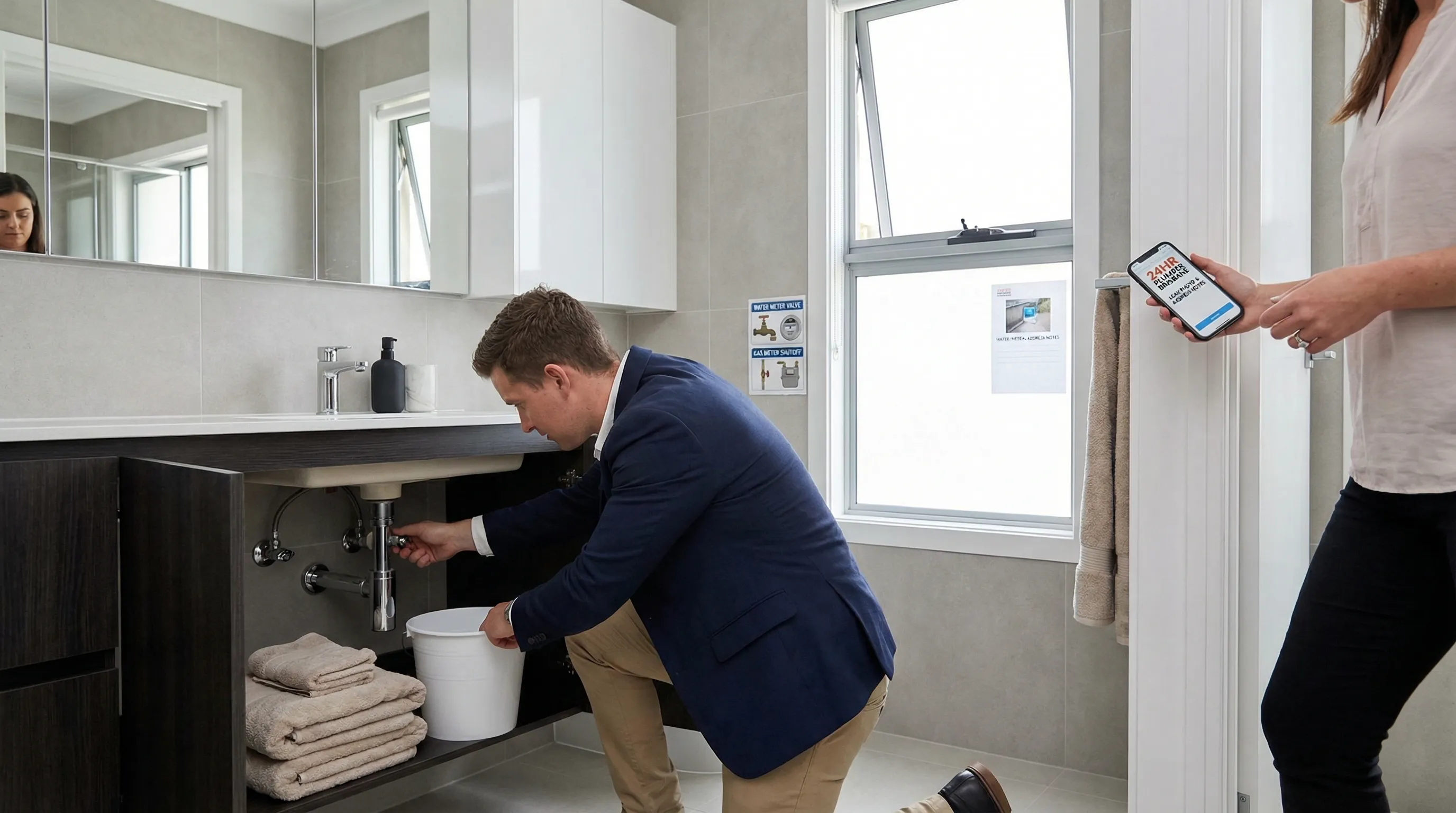
The first 5–10 minutes matter. Clear, calm steps can prevent further damage and help the plumber arrive prepared with the right tools or parts.
How To Shut Off Water Or Gas Safely
For water:
- Shut off at the nearest isolation valve if the issue is at a toilet, under-sink tap, or laundry connection. Turn clockwise until it stops.
- If isolation valves are missing or won’t close, shut off the main water supply (usually at the water meter). Turn the valve clockwise.
- If a hot water system is leaking heavily, turn off cold water supply to the unit (often a valve on the line feeding the tank). Homes with gas hot water system installations should also isolate the gas supply at the meter if there’s any sign of a leak from the appliance.
For gas:
- If there is a gas smell, turn off the gas at the meter (turn the handle so it’s perpendicular to the pipe).
- Ventilate by opening doors and windows.
- Avoid flames and sparks: do not use matches, lighters, and avoid switching power on/off if gas is concentrated.
If anyone feels unwell (headache, nausea, dizziness), they should move outside into fresh air.
How To Limit Water Damage And Protect Electrics
To reduce damage while waiting:
- Keep water away from electricity: if water is near power points, lights, or a switchboard, a licensed electrician may be needed after the leak is stopped.
- Move valuables: rugs, documents, electronics, and furniture legs out of wet areas.
- Contain and divert: use buckets, towels, and a mop: poke a small hole in a bulging ceiling section only if safe and necessary to relieve weight (water-filled plaster can collapse).
- Open cupboards and under-sink areas to help drying and to give the plumber access.
- Check outdoor drains: if heavy rain is a factor, clearing debris from deal with regularly can prevent water from backing into the home while you wait for the plumber.
Brisbane’s humidity can make mould grow quickly, so early drying (fans once safe) can save a lot of cleanup later.
What Information To Prepare For Faster Dispatch
A faster after-hours booking often comes down to clear information. Before calling, gather:
- Exact address (including unit number, gate codes, and best entry point)
- What happened and when (sudden burst vs slow leak over days)
- What has been isolated (main water off? gas off? which valves?)
- Where the issue is (kitchen, bathroom, ceiling, outside near meter)
- Photos or a short video (especially for leaks through ceilings or drain overflows)
- Type of property (house, unit, commercial site) and access constraints
When contacting The Brisbane Plumbers, having this ready helps their team triage and dispatch efficiently. For urgent jobs: 1300 576 388.
How To Choose A Reliable 24hr Plumber In Brisbane
After hours, people are stressed and tired, exactly when bad operators rely on quick decisions. A reliable 24/7 plumber Brisbane specialists recommend should be easy to verify, clear on pricing, and focused on making the property safe first.
Credentials To Look For (Licensing, Insurance, Compliance)
A dependable emergency plumber should be able to confirm:
- Appropriate Queensland plumbing licensing for the work being done (and gas work requires the correct gas fitting authorisation).
- Insurance, including public liability. This matters if something goes wrong on site.
- Compliance documentation when required (especially for gas fitting and certain commercial plumbing work).
- Experience with CCTV drain inspections and blocked drain solutions if drains are involved, guesswork can waste time and money.
The Brisbane Plumbers offer emergency response as well as CCTV drain inspections, blocked drain solutions, pipe relining, general plumbing repairs and maintenance, and hot water system diagnostics and repairs, useful when an emergency reveals a deeper issue.
Questions To Ask On The Phone Before Booking
A short phone call can prevent an expensive surprise. Helpful questions include:
- “What is the after-hours call-out fee and what does it include?“
- “Is there a minimum charge or minimum time billed?“
- “Are parts extra and are there common parts you carry?” (helps with hot water or toilet issues)
- “Can the plumber isolate and make safe tonight, then return in business hours for major repairs?” — this is especially relevant for expert sewer repair Brisbane work, where a full fix may require return access and daylight conditions.
- “Will the technician call before arriving and give an ETA?“
If the operator cannot give even a rough structure (call-out + hourly + parts), that’s a warning.
Red Flags: Pricing Traps And Pushy Upsells
After-hours plumbing is not cheap, but it should still be transparent. Common red flags:
- Vague pricing (“we’ll see when we get there”) with no fee structure at all
- Pressure to approve big replacements immediately without showing the failure point
- Inflated ’emergency’ part pricing without alternatives
- Refusal to attempt isolation/temporary stabilisation when it’s a sensible first step
- No interest in evidence (they don’t ask where the leak is, whether water is off, or what fixtures are affected)
A professional emergency plumber focuses first on safety and stopping damage, then explains repair options and costs in plain language.
After-Hours Plumbing Costs In Brisbane: What To Expect
Most people searching “24hr plumber Brisbane” are worried about two things: how quickly someone can arrive and how much it will cost. After-hours pricing is normal in the industry because technicians are on standby, but the bill should still make sense.
Typical Call-Out Fees, Hourly Rates, And Surcharges
In Brisbane, after-hours invoices commonly include:
- A call-out fee (covers travel and initial attendance)
- An hourly rate (may start from arrival time)
- Surcharges for late nights, weekends, and public holidays
- Parts and materials (pipes, valves, hoses, washers, traps)
Rates vary by company, time of night, and job type (especially gas). The key is not the exact number, it’s whether the plumber explains the structure upfront and sticks to it. Jobs involving downpipe repairs Brisbane or sewer-related work may carry additional access charges if pipework is below ground or requires excavation.
How Quotes, Estimates, And Minimum Charges Work
After-hours, it is often not possible to provide a fixed quote over the phone because the cause is unknown. Expect one of these approaches:
- Estimate range after hearing symptoms (e.g., “likely between X and Y depending on access and parts”)
- Minimum charge (for example, first hour billed at a set rate)
- Upfront approval once on site (technician inspects, then explains costs before proceeding)
A clear process protects both sides. It also reduces the chance of paying for unnecessary work.
How To Reduce The Final Bill Without Cutting Corners
There are practical ways to keep costs under control without compromising safety:
- Isolate early: shutting off water or gas reduces damage and the time spent on cleanup.
- Provide access: clear under-sink cupboards, move cars from driveway access points, and keep pets secured.
- Share history: if a drain blocks every few weeks, say so — CCTV inspection may solve it faster than repeated plunging. This applies equally to recurring blocked toilet Brisbane problems, which often stem from a deeper line issue rather than the fixture itself.
- Ask for “make safe now, repair later” when appropriate: stopping a leak at 1 am and returning next day for pipe relining or non-urgent replacement can reduce after-hours labour.
- Keep records: photos and notes help if an insurer is involved.
For homeowners and businesses that need round-the-clock support, The Brisbane Plumbers position their service around reliable 24/7 response for residential and commercial needs, which often saves money by limiting damage rather than letting it run until morning.
Common 24hr Plumbing Problems And Typical Fixes
Emergency plumbers see patterns. Knowing the usual causes helps residents explain symptoms clearly and understand what a technician is likely to do on arrival.
Burst Pipes, Major Leaks, And Water Pressure Failures
Common causes include failed flexible hoses, corroded pipework, cracked fittings, and pressure spikes. For homeowners, accessing reliable burst pipe repair services quickly is the single most effective way to limit water damage. Typical emergency actions include:
- Isolate the affected line (or whole property if needed)
- Locate the failure point (sometimes behind walls or ceilings)
- Replace a hose or fitting as an immediate fix
- Temporary repair (clamp or section replacement) to restore water safely
If repeated leaks occur or access is difficult, a plumber may recommend planned work during business hours, such as replacing ageing pipework sections in a single coordinated visit rather than piecemeal emergency fixes.
Blocked Drains And Overflowing Toilets
Overflowing toilets and floor wastes are urgent because they can spread contaminated water. A blocked toilet situation is among the most common after-hours calls, and a blocked toilet Brisbane service can usually restore function quickly. A 24hr plumber may:
- Use a plunger/auger for local blockages
- Jet the drain for grease, sludge, or tree root intrusion
- Run a CCTV drain inspection to confirm the cause and exact location
Stormwater overflow during heavy Brisbane rain is also a common trigger for after-hours calls. Addressing blocked stormwater drains service providers promptly can prevent water from pooling against foundations or entering the property through floor wastes and overflow paths. If tree roots or collapsed pipes are found, pipe relining can be an option to repair the line without full excavation, depending on pipe condition.
Hot Water System Failures And No Hot Water
No hot water is sometimes an “urgent but not dangerous” issue, unless the unit is leaking or electrical components are at risk. For properties with a gas hot water system, a failure at night usually means diagnosing ignition, pressure, or thermostat faults before deciding whether a repair or replacement is needed. Some Brisbane homeowners also use heat pump hot water Brisbane systems, which have their own diagnostic process — particularly around refrigerant circuit faults and compressor issues that differ from standard electric or gas systems. Typical steps include:
- Diagnose power/gas supply issues (tripped breaker, failed ignition, thermostat faults)
- Check relief valves and pressure (a constant discharge can indicate problems)
- Isolate and make safe if the tank is leaking
The Brisbane Plumbers offer hot water system diagnostics, repairs, and maintenance, which can be scheduled after an emergency stabilisation when appropriate.
Gas Smells, Suspected Leaks, And Carbon Monoxide Risks
Gas issues are treated as high priority. Typical actions:
- Confirm isolation at the meter and check appliance shut-off valves
- Test for leaks using appropriate detection methods
- Repair or replace faulty fittings and confirm safe operation
Carbon monoxide risk increases with faulty appliances and poor ventilation. Any persistent symptoms (headaches, nausea, fatigue) in enclosed spaces should be taken seriously, and occupants should move to fresh air while the issue is assessed.
For urgent gas fitting support in Brisbane, contact a qualified provider — The Brisbane Plumbers include gas fitting services as part of their emergency response offering.
Emergency Plumbing For Homes, Units, And Businesses
Emergency plumbing looks different depending on who controls the property and what approvals are required. Units, rentals, and commercial sites often have extra steps, but damage still needs to be stopped quickly.
Strata, Rentals, And After-Hours Approval Pathways
For rentals, tenants should:
- Follow the lease’s emergency procedure (often a preferred trades list)
- Notify the property manager as soon as practical
- Keep receipts and written notes if an emergency call-out is authorised
Issues like toilet leaking Brisbane plumbing problems in a rental can be treated as urgent if the leak is uncontrolled or creating hygiene concerns — tenants don’t need to wait for landlord approval in genuine emergencies under Queensland tenancy rules.
For strata units, responsibility may depend on whether the issue is within the lot (internal fixtures) or common property (main stacks, shared lines). A plumber can often “make safe” first, then the body corporate/strata manager can approve permanent repairs.
Commercial Sites: Kitchens, Bathrooms, And Backflow Issues
Commercial sites can’t always wait because downtime is expensive and hygiene standards matter. Common after-hours commercial issues include:
- Blocked kitchen drains from grease buildup
- Toilet and urinal failures affecting staff/customer amenities
- Burst pipes in ceilings or plant rooms
- Backflow concerns (especially where compliance is required)
- Sewer-related failures — work on commercial sites often needs to be documented and approved in writing for insurance and compliance purposes.
A commercial-focused emergency plumber should be able to isolate quickly, keep the site safe, and document what was done so management can follow up in business hours.
Documentation And Photos For Landlords Or Insurers
Whether it’s a home or business, basic documentation can reduce disputes later:
- Take photos/videos of the source (if visible) and the damage
- Note time discovered, actions taken (water off at meter), and any safety steps
- Keep invoices and job notes from the plumber
- Record serial numbers for hot water systems if replacement becomes necessary
Documentation is particularly important for downpipe repairs Brisbane services, where stormwater damage to walls or landscaping may form part of an insurance claim that requires evidence of the source and timing of the failure.
Preventing Repeat Callouts: Simple Maintenance That Pays Off
Many after-hours call-outs come from issues that gave subtle warnings first: a tap that kept dripping, a drain that kept slowing, a hose that looked “fine” until it wasn’t. Simple checks reduce the chance of another late-night emergency.
Weekly And Monthly Checks To Catch Problems Early
Practical habits for Brisbane properties:
- Check under sinks and in cupboards for dampness or a musty smell (early leak sign).
- Look at flexible hoses to toilets, basins, and washing machines for bulging, corrosion, or fraying.
- Watch the toilet base for rocking or minor seepage (can signal seal issues that become toilet leaking Brisbane service calls if left too long).
- Listen for running water when fixtures aren’t in use (possible toilet fill valve leak).
- Clear outdoor drains and grates before heavy rain — downpipe repairs Brisbane plumbing professionals regularly see damage that started with a blocked gutter or downpipe that was ignored through a dry season.
When To Book A Non-Urgent Inspection Instead Of Waiting
A non-urgent booking is usually the smarter choice when:
- A drain blocks more than once in a few months (often needs CCTV inspection to find the real cause — repeated blocked toilet service callouts to the same property are a strong signal of a deeper line problem).
- Water pressure changes across multiple fixtures without a clear reason.
- Hot water takes longer and longer to recover, or relief valve discharge becomes frequent — in some cases, upgrading to a gas hot water system installations service can address both reliability and efficiency issues in one visit.
- There are minor leaks that are controlled but persistent.
- Stormwater overflow occurs even in moderate rain — sewer repair Brisbane services can often identify whether the issue is within the sewer line or the stormwater system, which affects who is responsible and how it’s fixed.
Scheduling during business hours can reduce labour costs and gives time for the best repair method, such as targeted repairs, preventive replacements, or pipe relining where suitable.
For Brisbane property owners who prefer to prevent emergencies instead of reacting to them, The Brisbane Plumbers provide general plumbing repairs and maintenance, CCTV drain inspections, and long-term solutions alongside 24/7 emergency plumbing. For service enquiries: [email protected] or 1300 576 388.
Frequently Asked Questions about 24hr Plumbers in Brisbane
When should I call a 24hr plumber in Brisbane rather than waiting until morning?
Call a 24hr plumber in Brisbane when the problem could quickly cause damage or danger, such as a burst pipe, water leaking through ceilings, sewage overflow, water near electrics, or any suspected gas leak. Situations involving burst pipe repair or active expert sewer repair Brisbane needs that are spreading contaminated water should never wait until morning. If you can’t isolate the issue or it’s escalating, treat it as urgent.
What should I do in the first 10 minutes before a 24hr plumber in Brisbane arrives?
Shut off water at the nearest isolation valve or the main meter, and turn off the hot water unit’s supply if it’s leaking. Keep water away from power points and switchboards, move valuables, and contain leaks with buckets and towels. Take photos and note what happened for faster dispatch.
How do I safely shut off gas if I smell a leak?
If you smell gas, turn off the gas at the meter by rotating the handle so it’s perpendicular to the pipe, then open doors and windows to ventilate. Avoid flames and sparks, and don’t switch electrical items on or off if gas is concentrated. If anyone feels unwell, move outside immediately.
How can I choose a reliable emergency plumber after hours in Brisbane?
Look for clear Queensland licensing (and correct gas fitting authorisation where relevant), public liability insurance, and a transparent pricing structure. Ask about the after-hours call-out fee, minimum charges, and whether they can “make safe” overnight and return in business hours. Avoid vague pricing or pushy upsells.
How much does an after-hours 24hr plumber in Brisbane usually cost?
After-hours plumbing typically includes a call-out fee, an hourly rate, and surcharges for late nights, weekends, or public holidays, plus parts and materials. Exact prices vary, but the key is transparency: a reputable 24hr plumber in Brisbane should explain the fee structure upfront and get approval before work proceeds.
Can a 24/7 plumber just do a temporary repair and come back later for the full fix?
Yes — often the best approach is to stop the leak, isolate the fault, and make the property safe at night, then schedule major repairs in business hours to reduce after-hours labour. This is common for issues like pipe relining, non-urgent replacements, or deeper drain repairs confirmed by CCTV inspection. It also applies to stormwater-related faults where a temporary fix overnight can be followed by a full blocked stormwater drains service assessment the following day